Gone, but Not Gone

flower.sprout

Here’s what I have to say to my illness.

Wretched multiple sclerosis (MS),

You may have whittled down my ability to teach. You may have invaded my brain with countless lesions. Making it difficult for me to meet the demands of full-time teaching. But, I’m still teaching occasionally. You may suck the energy out of my body. But, not my life. I’m NOT gone. Neither are my skills and talents.

Always defiant and victorious, Vicki

Life created by God:

Consider a forsythia bush. It maintains the potential to display beauty regardless of the season. In winter, its branches look dead. But, deep inside its lifeless appearance lays a vibrant life.

I’m like that winter branch. I still have the potential to share God’s love regardless of my symptoms. I’ve found new ways to bless others. Instead of baking cookies, I snap photographs of God’s creation. And use them to design calendars.


zoo.peacock  zoo.flamgo  zoo.peacock2

Regardless of the seasons in my life, I remain the person God created me to be. I have the assurance that, “I am fearfully and wonderfully made…” (Psalm 139:14a). MS hasn’t destroyed who I am. My disease may have altered my plans. But, my illness can’t demolish God’s plan for my life.

Similarly, mental illness (MI) may have stripped your children of their desire to do anything. But, it hasn’t robbed them of their God-given talents and skills. Ask God to reveal evidence of those abilities.

God has given me glimpses of my son’s talents and skills. Chris occasionally plays his keyboard. The music I hear doesn’t merely fill me with pride. It fills me with gratitude.

That’s the Chris I know and love.

Recently, Chris was telling me about the operating system (OS) he had created for computers.

“Check out my website, Mom. Visitors will find instructions how to install the free OS.”

When I clicked on his site, I had no clue what it all meant, but was amazed. I was blown away by the clarity of his language. Obviously, MI hadn’t robbed him of his technical ability, or his ability to explain directions in understandable terms.

Life with a purpose:

Has despondency has left your child with little or no motivation to function? Or does your child desperately want to contribute, but isn’t sure how? Does MI seem to present insurmountable obstacles?

Do you look at our child with MI and wonder what will become of him? You’re not alone. Many grapple with the question, “What gives meaning to my child’s life?”

Perhaps, you’re determined that his existence won’t be all about MI. Ask God to arouse in him a desire to use his creativity or skills. Seek God’s wisdom to discern His plan for your child.

Power for living:

We imagine our kids living a life full of challenges. And our hearts are broken. What hope can we gain from the Bible? Did anyone face unending trials? The apostle Paul did. So, when he shares hopeful words, we listen.

First, read what Paul endured:

“Are they servants of Christ? (I am out of my mind to talk like this.) I am more. I have worked much harder, been in prison more frequently, been flogged more severely, and been exposed to death again and again. Five times I received from the Jews the forty lashes minus one. Three times I was beaten with rods, once I was pelted with stones, three times I was shipwrecked, I spent a night and a day in the open sea, I have been constantly on the move. I have been in danger from rivers, in danger from bandits, in danger from my fellow Jews, in danger from Gentiles; in danger in the city, in danger in the country, in danger at sea; and in danger from false believers. I have labored and toiled and have often gone without sleep; I have known hunger and thirst and have often gone without food; I have been cold and naked” (2 Corinthians 11:23-27).

It’s no surprise that Paul didn’t think he could endure it any longer. Join me in my “conversation” with Paul.

When you reached your limit, what did you do, Paul?

“Three times I pleaded with the Lord to take it away from me. But he said to me, ‘My grace is sufficient for you, for my power is made perfect in weakness.’ Therefore I will boast all the more gladly about my weaknesses, so that Christ’s power may rest on me” (2 Corinthians 12:8-9).

So, God’s grace helped you?

“But by the grace of God I am what I am, and his grace to me was not without effect. No, I worked harder than all of them—yet not I, but the grace of God that was with me” (1 Corinthians 15:10).

It’s encouraging to hear that God’s power and grace worked through you. I pray my child will experience that same indwelling, divine power and grace.


Grace that’s never gone

So how did Paul endure? God’s grace remained with him.

 Regardless of the challenges our kids have to face, they will always have access to God’s grace.

Like Paul, I can say, “By the grace of God I am what I am.” And by the grace of God, our children will be who they are…who the Creator made them to be.

If you feel beaten down, let Hillsong’s “You Are My Strength” minister to you. The lyrics tell of God’s amazing grace:

“In the fullness of Your grace

In the power of Your name

You lift me up

You lift me up”

Listen to their song over and over until the lyrics block out all the thoughts that attempt to discourage you. The Truth is that God’s grace will lift you up.

https://www.youtube.com/watch?v=iwvGFWKBo4o

Power for the Powerless

IMG_6033

Could the gunman’s mother have prevented the Dallas June 13th attack? Once again, the nation’s attention is on parents of a killer with mental illness (MI).

As you watched the drama unfold, did you scream at the TV and yell, “That man is obviously mentally ill. The mental health system is broken! Who is there to help when an adult with MI goes off his meds?” We couldn’t help but fear for the lives of law officers. And pray that innocent citizens would be safe.

After it all ended, the investigation began. All-too-familiar questions were raised. Where there warning signs? How could a man with a troubled mind and past gain access to an arsenal of weapons and an armored vehicle?

Did you sympathize with the mother? How much did she know? What had she already endured? Stories soon came out with reports.

Yahoo’s online article “Dallas suspect had talked of ‘shooting up schools and churches’” (by Jason Sickles), shared a quoted made by the gunman’s mother. Sickles reported that, “Boulware’s mother told a detective that her son ‘talks to himself quite frequently and appears delusional, but also said that he is not taking any medications.’”

Her son had gone off his medications. She verified what we suspected. Those of us raising kids with mental illness (MI) can only wonder how Boulware’s mother felt. After the recent incident, Jeannine Hammond, Boulware’s mother, provided some insight.

She released a statement which was quoted in The Daily Mail’s article “Crazed Dallas gunman went on nine-hour rampage after losing custody of his son to his own mother as judge who oversaw case says ‘I knew this would happen’” (by Kelly Mclaughlin, Kieran Corcoran, and Thomas Burrows). The article stated, “Hammond wrote in a statement released by an attorney … She said that he talked to himself ‘quite frequently and appears delusional …We apologize to the police for his behavior … We loved him and will remember him as the man he was before all of this took place. We are so grateful that no other families are having to bury anyone because of his actions.’”

Surely, Jeannine Hammond is grieving the loss of her son. Her statement reveals that she knew her son had MI. It also tells us that she didn’t stop loving him and never forgot what he was like before MI ravaged his life and the lives of others.

Feeling Powerless?

We can just imagine how powerless she felt to prevent such an attack. But, she wasn’t alone. Apparently, even a judge was powerless to prevent the attack.  The Daily Mail’s article reported about a judge who encountered Boulware in her courtroom for a custody hearing. The reporters shared that Judge Kim Cooks stated “Boulware threatened her multiple times after the custody trial and said she was ‘in shock’ after hearing about what happened at the police headquarters.” They went onto quote Cooks as saying, “‘’I knew he was going to do something, but I always thought his target would have been me.’”

If that judge couldn’t stop that man who threatened her life, who could?

It’s worth emphasizing that most individuals with serious MI don’t become killers. But, moms raising kids with MI can surely identify with a mother who feels powerless to help her child. A daughter has an eating disorder and a mom tries to get her to eat. A son is severely depressed and the mom tries to get him to talk, smile, or do anything. A son explodes verbally or physically and a mom is no match for his unprovoked anger. An adult prodigal with MI calls home periodically. His mom tries to convince him to take care of himself (to take his meds and not attempt suicide). To no avail.

Helpless and powerless find power. Our Source of Power:

Is there power for the powerless? Yes. There is One who can work in the hearts and minds of our children. Our almighty Father created the entire earth into existence simply by His word. Surely, God has the power to protect and guide His creation—our kids and us.

Just think about His incredible power. He said, “Let there be…” Instantly, He spoke beauty on the earth in all kinds of species, rock formations, and constellations. Held together by Him in perfect order and in breathtaking colors.

Stopping to reflect on such amazing power helps shrink the size of our problems. Suddenly, they seem smaller in light of His awesome strength.

His power is unmatched and personal. We need to remind ourselves that we have access to that power.

Sun and Son:

Solar panels rely on the sun for power. They serve as reminders to us. We can rely on God’s Son for power. His power gives us strength to endure each day.

IMG_5079

“I pray that the eyes of your heart may be enlightened in order that you may know the hope to which he has called you, the riches of his glorious inheritance in his holy people, and his incomparably great power for us who believe. That power is the same as the mighty strength he exerted when he raised Christ from the dead and seated him at his right hand in the heavenly realms” (Ephesians 1:18-20).

On days when MI seems like an unconquerable foe, repeat that passage over and over again. Then, ask God to make that power real in your life.

Dear Father,

Thank You for assuring me that Your incomparably great power is for me. If Your power can conquer death, I will trust it to do a mighty work in my child’s mind, heart, and life. Increase my faith and help me see evidence of Your power today. In Jesus’ name, Amen.

Power: It’s blowing in the wind.

Wind turbines use wind to make electricity. They remind us that it’s God who causes the wind to blow, giving power to the turbines. Our almighty God, who controls the strongest tornados, has power carry us through.

IMG_5068crpdPS

“The Spirit of God has made me; the breath of the Almighty gives me life” (Job 33:4).

Dear Father,

Breathe new life into me today. As Your Son used His power to calm the wind and waves, calm my heart. In Your Son’s precious name of Jesus, Amen.

“You, God, are awesome in your sanctuary; the God of Israel gives power and strength to his people.

Praise be to God! (Psalm 68:35).

Preparing for the Unexpected

IMG_6065

Certain signs can’t be trusted. Like signs that say, “Construction ahead.” After sitting in a sixty-minute backup, we finally arrive at the construction site.

No workers? Really?!!!!

No wonder we’re tempted to ignore the warning signs along the highway.

My husband and I recently traveled over 400 miles to visit our son and his family. Along the way, we actually saw numerous work crews repairing sections of the turnpike. We realized the sign “Construction vehicle—keep alert for sudden stops and turns” had accurately predicted that traffic would be halted.

“Keep alert for sudden stops and turns” got me thinking. Would a warning sign have helped prepare me for my son’s mental illness (MI)? What would I have done if a sign warned, “Suffering and sorrow ahead”? Probably nothing. I was powerless to shield Chris from the wretched illness.

Some dangers can be avoided. Like fallout from a bomb explosion. When I was growing up, my parents built a bomb shelter in our yard. (You read that right…a bomb shelter! Not a built in pool, but a bomb shelter.) We were prepared for any incoming bombs.

Sadly, there are no MI shelters. We can’t run for cover to escape the onslaught of our child’s MI.

Yet, that sign “Keep alert for sudden stops and turns” holds wise advice. Periods of manageable symptoms can be suddenly interrupted. Without warning, new burdens blindside us. A familiar trial torments our child. Fragile emotions re-emerge. Routine details of life come to a screeching halt.

Keep alert for sudden stops and turns. What does that mean? Should I remain in a vigilant state? Would that be good or even helpful? Could I possibly prepare for the unexpected?

Preparing for any trial:

My mother couldn’t prepare for my father’s impending death. Back in 1992, my dad fought lung cancer. Doctors performed surgery and treated him with chemotherapy and radiation. It became evident after two years that nothing would cure him. As his end drew near, my mother asked me, “Is this really happening?”

Clearly, there were warning signs that my father might lose his battle. Yet, nothing had prepared my mom’s heart for her loss.

Can anything prepare our heart for the struggles and losses our children will face?

When our son, Chris had his first break from reality, I had to be on alert—literally. One minute he’d be explosive and pound walls. The next, he’d be curled up in a ball, weeping. I learned to expect anything. Like what he did after we arrived home from the store one day. I parked the car and Chris took off running. Prompting me to drive around the neighborhood looking for him. Only to return home to hear a phone message from a neighbor saying Chris had gone to their house.

Being alert meant staying half-awake most nights. Chris’ psychosis prevented him from sleeping soundly. He’d pace the floor, while rambling on about things that made no sense. Mumbling bazaar comments. I’d strain my ears to hear sounds that might let me know of any danger.

Nowadays, Chris is doing fairly well. But those words on the sign still echo in my mind:

Keep alert for sudden stops and turns.

Does the Bible help us know how to keep alert – to prepare for the unexpected?

Peter instructs us to, “Keep a cool head. Stay alert. The Devil is poised to pounce, and would like nothing better than to catch you napping. Keep your guard up. You’re not the only ones plunged into these hard times. It’s the same with Christians all over the world. So keep a firm grip on the faith. The suffering won’t last forever. It won’t be long before this generous God who has great plans for us in Christ—eternal and glorious plans they are!—will have you put together and on your feet for good. He gets the last word; yes, he does” [1 Peter 5:8-11 (MSG)].

Thanks, Peter, for those reminders. We’re not alone; others are experiencing hard times like these. Suffering won’t last forever. We need to keep the faith.

How do we “keep our guard up”? By praying unceasingly and specifically for our child and our family. And by staying in His Word.

Belts:

Seatbelts protect us from injury in cars. God’s belt of Truth helps us stand firm in our faith.

“Therefore put on the full armor of God, so that when the day of evil comes, you may be able to stand your ground, and after you have done everything, to stand. Stand firm then, with the belt of truth buckled around your waist” (Ephesians 6:13-14a).

Reality and truth:

Some of our children cling to a thread of reality in their minds. Often even we struggle with the reality of our lives. Life tends to seem surreal.

Some truths can be shattered. I used to believe that my husband and I could teach our kids how to handle stress. But, then came along MI. My fragile truth collapsed. I used to think that I could protect my children. But, then MI struck. My truth of motherly protection evaporated.

Happily, I find unshakable Truths in the Bible. That’s something to hang onto. I can depend on His promises. God’s character is never-changing. So, I rely on God’s belt of truth. So can you. Buckle up! (one size fits all!)

Desert Island Paradise?

Diamond Head Honolulu, Hawaii

Diamond Head
Honolulu, Hawaii

Would you pick up a travel brochure that advertised, “Visit the Land of Sorrow”? Perhaps it would at least grab your attention.

Curiosity might tempt you to peek at the inside pages. You’d read:

The Land of Sorrow promises to be both exhilarating and frightening. There will be times of fear, followed by times of fun.

Pass through the parched Desert of Dried-up Dreams. Then, visit the Island Paradise of Joy-filled Living.

You’d quickly return the brochure to its fellow unwanted pamphlets. That kind of trip wouldn’t appeal to you. The destination would sound all-too familiar. Kinda like life which includes raising a child with mental illness (MI)—a rollercoaster life.

Recently Genesis 41:52 grabbed my attention. My daily devotional included the verse, “God has prospered me in the land of my sorrow” (MSG).

Prosperity in the land of sorrow?

Curiosity tempted me to peek inside the Bible and find out the context.

Genesis 37, 39, and 40 set the stage. Those chapters describe Joseph’s land of sorrow. Out of jealousy, his brothers threw him into a pit and left him to die. Then, they realized selling their brother would be profitable. So, they lifted him out and sold him to the Ishmaelites, who took Joseph to Egypt. There, the captain of the guard’s wife lied about Joseph. So, Joseph was cast into prison. While in the dungeon, Joseph interpreted the chief butler’s dream. Joseph hoped that when the butler was released, he’d convince Pharaoh to release him. But, when the chief butler got released, he forgot all about Joseph.

Then came Joseph’s prosperity. Two years later, the butler finally remembered Joseph. He told Pharaoh that Joseph could interpret his dream (Genesis 41:1-13). Joseph assured Pharaoh, “God will give Pharaoh an answer of peace” (Genesis 41:16b). Joseph’s interpretation pleased Pharaoh so much that he said, “‘You shall be over my house, and all my people shall be ruled according to your word; only in regard to the throne will I be greater than you … See, I have set you over all the land of Egypt’” (Genesis 41:40-41).

That was just the beginning of Joseph’s prosperity. He and the people of Egypt enjoyed seven years of abundant food. Pharaoh gave Joseph a wife, who bore him two sons.

That’s the part of the story which includes the intriguing verse.

“He named his second son Ephraim (Double Prosperity), saying, ‘God has prospered me in the land of my sorrow’” [Genesis 41:52 (MSG)].

The context gave me insight. Joseph endured hardship in the land of Egypt. Later, he enjoyed prosperity in the same land. It encouraged me to read about someone who experienced an easy life after tremendous hardship. His God could do the same for me. So I read on.

Just as God had instructed in Pharaoh’s dream, Joseph stored up food during the seven yrs. of plenty to ensure he’d have food during the seven yrs. of severe famine. Genesis 41:53-54 reveals the wisdom of God’s advice.

“Then Egypt’s seven good years came to an end and the seven years of famine arrived, just as Joseph had said. All countries experienced famine; Egypt was the only country that had bread” [Genesis 41:53-54 (MSG)].

Can we relate to Joseph?

He was treated unfairly by his brothers, by the captain of the guard’s wife, and by the chief butler. It can seem unfair that we’ve been charged with raising a child with MI (especially if we’re also dealing with other challenges).

Like Joseph, we’ve gone through times of sorrow. We’ve watched our children suffer losses, experience turmoil, or endure depression and anxiety. Some of us have witnessed our children bear paranoia or psychosis.

Joseph prepared for the oncoming famine by storing up grain. We can prepare for the possible re-emergence of MI symptoms by storing up verses.

Pharaoh told his servants, ““Can we find anyone like this man, one in whom is the spirit of God?” (Genesis 41:38).

The same Spirit, which was in Joseph, is in those of us who have received Christ as our Savior. The Holy Spirit will give us wisdom and discernment to help our fragile and vulnerable children.

We still may get hung up on the taunting question of why. Why did God allow MI to strike our children?

Joseph’s story offers us an end to that torment. Joseph understood that God had a plan for his life. So, he was able to forgive his brothers. He told them, “You intended to harm me, but God intended it for good to accomplish what is now being done, the saving of many lives” (Genesis 50:20).

That presents us with a great challenge. Can we view our circumstances from a heavenly perspective? We may never fully understand God’s purposes for the trials we endure. But, we can be sure His plans are perfect and His love is endless. When life doesn’t make sense, God’s Word calms our fear and confusion. His unchanging Truths help us trust God even if we can’t track Him.

Dear Father,

Help me look past my circumstances that seem so unfair at times. Give me have an eternal perspective. Please prosper me and my family in our land of sorrow. Lead me to verses that I can use during stormy days. Verses that will remind me of Your love and faithfulness. Be gracious to restore joy and peace. In Jesus’ name, Amen.

Wasted Wondering

Rear.Guard

Would you ever hop in a car without knowing your destination?  I have.

Our family used to have elaborate road rallies. We’d pair up with a partner and hop in a car, not knowing the destination or route. Just before we took off, my cousin, Kate, would hand us a list of directions and clues.

We had to locate specific information along the way. Kate’s cleverly-worded clues made it like a scavenger hunt.

At the dead end, turn right. How many birdhouses does the Italian family own?

On that road, we’d spot a house displaying an Italian flag. We’d count the number of birdhouses and move on to the next set of directions and clue.

Prizes were awarded to the pair who got the most correct answers in the shortest time. Part of the fun was traveling unfamiliar roads and not knowing where we were heading. It was an exciting adventure. We’d wonder, What’s over that next hill? Where’s Kate taking us?

But, not knowing where a crisis is heading can be terrifying. Helping a child who’s suffering with mental illness (MI) can be complicated. It’s hard to know what’s going on. Waves of wondering overtake our thoughts.

I wonder if my son is really feeling better. I wonder what he’s thinking. I wonder if he is taking his medication. I wonder if he’s isolating at school. I wonder if other people know what’s going on…

Wondering about the present causes us to carry a burden we’ve been invited to relinquish. We don’t need to carry our heavy load of cares. Peter reminds us to, “Cast all your anxiety on him because he cares for you” (1 Peter 5:7).

Wondering about the present often leads to wondering about the past. We secretly feel responsible for our child’s suffering.

I wonder if I missed something. I wonder if I should have done something more. I wonder if I should have found a different therapist. I wonder if this wouldn’t have happened if I wasn’t so busy…

Wondering about the past causes us to feel guilty.  Christ’s own disciples wondered the same thing when they saw a blind man. They asked Jesus, “‘Rabbi, who sinned, this man or his parents, that he was born blind?’ (John 9:2.)”

Christ’s answer relieves us from unnecessary guilt.

“‘Neither this man nor his parents sinned,’ said Jesus, ‘but this happened so that the works of God might be displayed in him’” (John 9:3).

Then there’s the future wondering. MI can be so unpredictable. It’s difficult to see a clear path of recovery.

I wonder where this will lead. I wonder how bad this will get. I wonder if my marriage will survive this. I wonder if I can endure watching my son suffer. I wonder if he’ll be able to graduate. I wonder if he’ll be able to work. I wonder if he’ll experience another breakdown. I wonder how much stress he can handle. ….

Wondering about the future often leads to fear and worry. Christ said, “Therefore do not worry about tomorrow, for tomorrow will worry about itself. Each day has enough trouble of its own” (Matthew 6:34). God knows your needs and has promised to care for you.

Here’s a verse that will remind you that He’s guiding your steps and He’s got your back.

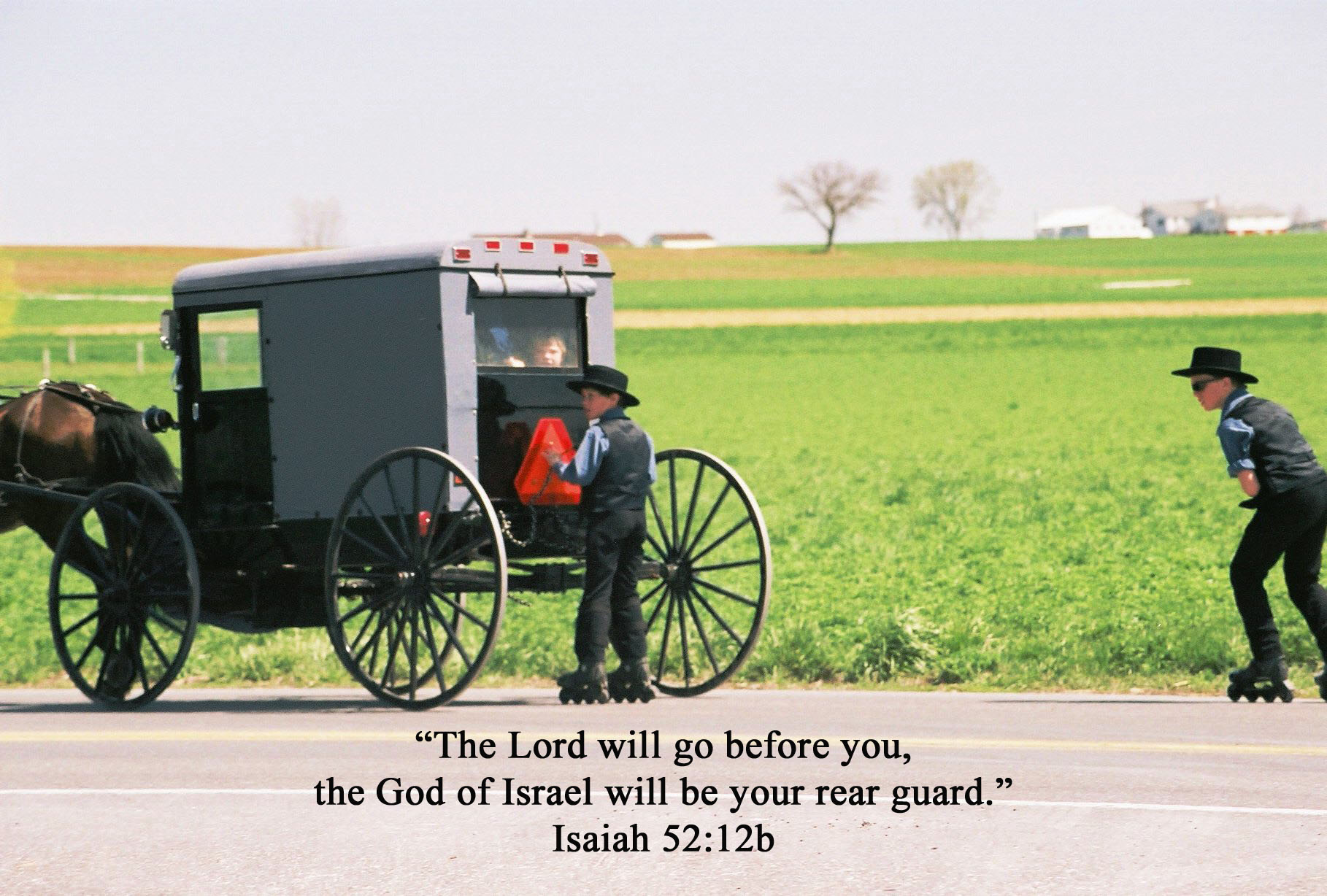
“The Lord will go before you, the God of Israel will be your rear guard” (Isaiah 52:12b).

None of us chose this trip with our child’s MI. We didn’t hop into a cab and say, “Please take us into downtown MI. Be sure to take the route with the most winding roads.”

Thankfully, we’re not on a journey driven by a taxicab driver. GOD is in control of our journey.

My problem with wondering is all about wandering.

I find that I fall into a snare of wondering when my thoughts wander from Him. The more I think about God, the easier it is to rest in His care.

How would you ask God to remove your wasted wondering?

Windows: A Source of Peace and Contentment?

window.2

Until then, only snakes and dentists scared me. One snowy night in December, I felt fear unlike never before.

Decades ago, several of my girlfriends joined me as I babysat two children. It was New Year’s Eve. The children were in bed. Teenage sounds filled the dining room. Music from a Beatles’ album accompanied the noise of giggling and chatting girls.

THUD!!!

A loud noise interrupted our festivities. A muffled bang sounded as if landed right outside the dining room wall. Fear muzzled our merriment. Like scared rabbits, we sat frozen with ears and eyes open wide. Listening. Did we imagine it?

The music played on. Then, we heard the sound again.

THUD!!!

We screamed and scurried away from the dining room wall. And tore into the living room.

Survival instincts kicked in. We started trying to figure out if danger lurked outside.

“I think someone is pounding on the wall.”

“It sounded like a gun shot.”

I felt a sense of responsibility to protect the children from…whatever. Suddenly, I realized my big brother was home. From the back window of my house, Ken would be able to see the dining room wall of the home where I was babysitting. So I called him on the phone.

“Ken, look outside our back window. Do you see anyone near the dining room window where I’m babysitting?”

“Oh yeah. I see large footprints in the snow leading right up to the window,” he teased.

Brothers!!!

One of my friends solved the mystery. “Vicki, it’s fireworks!”

We were never in danger. We simply forgot it was day of celebration.


Sounds in the night tend to scare everyone. The darker the night, the more terrifying is the noise. Vulnerability and helplessness magnifies fear.

Consider a woman is who is enjoying a quiet evening alone at home. Suddenly, she hears an unusual sound just outside her window. She peeks through the curtains to identify the source.  It may satisfy her curiosity. But, it won’t calm her nerves if she sees a burglar trying to enter her home.

Moms raising a child with mental illness (MI) can identify with that woman. The onset of our child’s illness rattles our nerves with equal intensity. It interrupts the solitude of a peaceful home. As the darkness of mental illness (MI) closes in, we’re more susceptible to fear.  Sometimes, our child’s symptoms suddenly increase.

A heavy THUD pounds on our heart. Survival instincts kick in. And we start trying to figure out how to help our child.

What just happened? What caused that?

We’re tempted to close the curtains of our lives. And hide all the turmoil and pain.

At times, we’re drawn to the window for a different reason. To gaze out and watch care-free families going about their daily routines. To see reminders of what life was like without MI. To catch glimpses of normalcy.

A window can’t provide lasting peace or true contentment. We’ll find comfort in God’s Word. Peering into the pages of the Word will calm our heart more than peering out any window.

How I love God’s Word! It’s my go-to place to find comfort. I echo the sentiments of the Psalmist who cries, “My eyes fail from searching Your word, saying, ‘When will You comfort me?’” [Psalm 119:82 (NKJV)].

Open the Word and find comfort.

The Bible hasn’t let me down. In my darkest times, I’ve found comfort. How is it possible to find comfort in the midst of our child’s illness? The Psalmist explains it this way:

“This is my comfort in my affliction, for Your word has given me life” [Psalm 119:50 (NKJV)].

Open the Word and find delight.

We can do more than go through the motions of each day. God’s tender mercies will help us live as we delight in His Word.

“Let Your tender mercies come to me, that I may live; for Your law is my delight” [Psalm 119:77 (NKJV)].

God’s Word keeps us from dying on the inside.

“Unless Your law had been my delight, I would then have perished in my affliction” [Psalm 119:92 (NKJV)].

“Trouble and anguish have overtaken me, yet Your commandments are my delights” [Psalm 119:143 (NKJV)].

If the Psalmist can find delight in God’s Word in the midst of trouble and anguish, surely so can we.

Open the Word and find strength.

Does the Psalmist’s plea sound like something you could have written?

“My soul melts from heaviness; strengthen me according to Your word” [Psalm 119:28 (NKJV)].

Seek God’s strength.

Open the Word and find hope.

Many of us find ourselves in hopeless situations. We hope in therapists or treatments. But, find they can’t always provide assurances for restoration. God’s Word never fails. The more we cling to It, the more we can proclaim, “You are my hiding place and my shield; I hope in Your word” [Psalm 119:114 (NKJV)].

Open the Word and find how to live each day.

God guides us through the days that begin and end in His Word.

“I rise before the dawning of the morning, and cry for help; I hope in Your word. My eyes are awake through the night watches, that I may meditate on Your word” [Psalm 119:147-148 (NKJV)].

The Bible satisfies our longing as we reflect on His promises throughout the day.

“Oh, how I love Your law! It is my meditation all the day” [Psalm 119:97 (NKJV)].

Open the Word and find treasure.

Many of us feel life’s unfair. The Psalmist experienced unfair circumstances and still could say,

“Princes persecute me without a cause, but my heart stands in awe of Your word. I rejoice at Your word as one who finds great treasure” [Psalm 119:161-162 (NKJV)].

Let him be your inspiration today.

Open the Word and find light.

Stumbling around in the dark can be scary. Flicking on a switch instantly brings relief. There’s danger of stumbling when we walk down a dark path. But, a flashlight illuminates our path, letting us know where to step. That’s what it’s like when we open God’s Word. The darkness of our situation suddenly seems brighter. The Bible reveals our next step.

“Your word is a lamp to my feet and a light to my path” [Psalm 119:105 (NKJV)].

“The entrance of Your words gives light; it gives understanding to the simple” [Psalm 119:130 (NKJV)].

When seeking peace and contentment, we have a choice: window or Word.  I choose God’s Word. How ‘bout you?

Not Abandoned

Lord.alone.bird

Do you feel you’ve been left to suffer alone? Has no one come alongside you to help you parent a child with mental illness (MI)?

When a loved one dies, friends and relatives flock to the home of the grieving family. When someone is going through cancer treatments, friends offer meals and send get-well cards. When a person has been in a car accident, family members rush to the hospital. It’s different when a child is admitted into a psychiatric unit.

Why do we feel so alone when experiencing a crisis due to MI? Often, it’s because our needless shame prevents us from reaching out. Sometimes others simply couldn’t understand the turmoil that’s in our child, in our homes, and in our heart. How could they? There are no words that could convey the devastation. The whole experience can seem so surreal—even to us.

Dealing with MI can be a long journey. We get so tired of … well, of it all. Especially the loneliness. But, you are not alone. It helps to know others understand.

Paul experienced abandonment.

The apostle Paul was literally abandoned. In the absence of supporters during his time of need, Paul didn’t abandon his faith. He knew God hadn’t abandoned him.

“At my first defense, no one came to my support, but everyone deserted me. May it not be held against them. But the Lord stood at my side and gave me strength, so that through me the message might be fully proclaimed and all the Gentiles might hear it. And I was delivered from the lion’s mouth. The Lord will rescue me from every evil attack and will bring me safely to his heavenly kingdom. To him be glory for ever and ever. Amen” (2 Timothy 4:16-18).

Can you feel God standing by your side, giving you strength to face another day?

Job experienced abandonment.

In the midst of his trials, Job experienced feelings of abandonment. He had suffered the loss of his business, animals, and children. Friends and family didn’t rally around him. They all left him. Imagine his loneliness.

Isolation led him to cry, “He has alienated my family from me; my acquaintances are completely estranged from me. My relatives have gone away; my closest friends have forgotten me. My guests and my female servants count me a foreigner; they look on me as on a stranger. I summon my servant, but he does not answer, though I beg him with my own mouth. My breath is offensive to my wife; I am loathsome to my own family” (Job 19:13-17).

So sad. So pathetic. Can you relate?

Sometimes MI causes our child to behave like one who is betraying us. Can anyone emphasize with that kind of hurt? Once again, we can reach back through the centuries and find someone who knows our pain. God speaks to our heart in the heart of the Bible. Smack in the middle of His Word we find the book of Psalms. There we read about David’s plight.

David experienced betrayal and persecution in the midst of abandonment.

“They repay me evil for good and leave me like one bereaved. Yet when they were ill, I put on sackcloth and humbled myself with fasting. When my prayers returned to me unanswered, I went about mourning as though for my friend or brother. I bowed my head in grief as though weeping for my mother. But when I stumbled, they gathered in glee; assailants gathered against me without my knowledge. They slandered me without ceasing. Like the ungodly they maliciously mocked; they gnashed their teeth at me” (Psalm 35:12-16).

Later in Psalms, David despaired that, Even my close friend, someone I trusted, one who shared my bread, has turned against me” (Psalm 41:9).

Here’s more proof that David endured betrayal and abandonment:

“If an enemy were insulting me, I could endure it; if a foe were rising against me, I could hide. But it is you, a man like myself, my companion, my close friend” (Psalm 55:12-13).

Christ experienced abandonment.

The night soldiers came to arrest Jesus, Matthew tells us that, “All the disciples forsook Him and fled” (Matthew 26:56b).

Is it comforting to know that Jesus understands your feelings of isolation?

Never Alone

The last thing we need is advice from people who have no clue what it’s like to raise a child with MI. However, someone who understands our loneliness would get our full attention if they shared advice. David knew we could benefit from his words of wisdom. He not only shared his hard-earned advice, but he added a promise. He recommended that you, “Cast your cares on the Lord and he will sustain you; he will never let the righteous be shaken” (Psalm 55:22).

David could say with assurance, “In peace I will lie down and sleep, for you alone, Lord, make me dwell in safety” (Psalm 4:8).

For David, it was personal. He found comfort and assistance from the One who never left him.

“As for me, I call to God, and the Lord saves me” (Psalm 55:16).

Can you echo David’s words of assurance? Because God is unchanging and all loving, every one of us can make the same statement, “As for me, I call to God, and the Lord saves me.”  We don’t find confidence by mustering up hope. We find confidence by trusting the One who is faithful.

A biblical pep talk:

David has these words of encouragement for you:

“Blessed are those who have regard for the weak; the Lord delivers them in times of trouble” (Psalm 41:1).

“A time is coming and in fact has come when you will be scattered, each to your own home. You will leave me all alone. Yet I am not alone, for my Father is with me” (John 16:32).

A lonely widow shows us how to trust God each day:

“The widow who is really in need and left all alone puts her hope in God and continues night and day to pray and to ask God for help” (1 Timothy 5:5).

You’re not alone.

Abundant

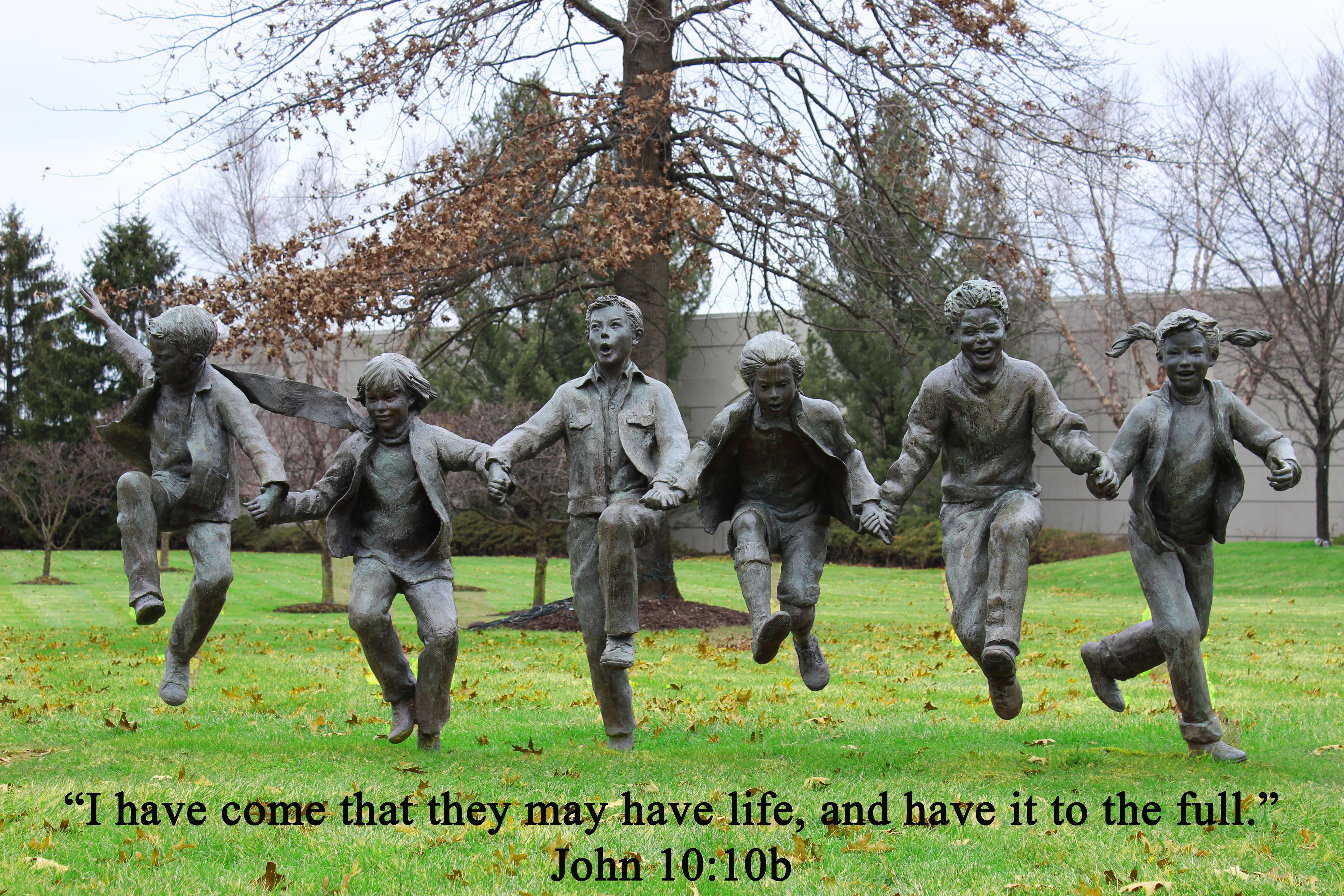
Life.Full

It’s funny when it happens to others. The sight of someone dropping a bag of groceries can be hilarious. The shopper picks up several items, only to drop them while chasing down a runaway orange.

“Oops! Get back here. Oops! …  #* &#%!@!”

We can relate to their misfortune. Who hasn’t tried juggling two bags? Or who hasn’t fallen victim to a self-destructing grocery bag?

But, it’s no joke when we find ourselves dealing with more than we can handle emotionally. That’s what happens when our child struggles with mental illness (MI). Somewhere in the midst of coping, we discover we’re juggling the details of life, while ministering to our child. Our minds are full of worries and work, cares and responsibilities. No wonder our heavy hearts break.

Our mind’s eye keeps checking the needle of our stress meter. We watch it edge closer to the danger zone: the limit to what we can handle. We dread reaching the point where we’ll run out of emotional fuel to keep going. Then what would happen? Who would collect our cares and carry the load?

God offers His abundance.

When stress is abundant, seek His abundant grace and peace.

“Grace and peace be yours in abundance through the knowledge of God and of Jesus our Lord” (2 Peter 1:2).

When despair is abundant, seek His abundant hope.

“May the God of hope fill you with all joy and peace as you trust in him, so that you may overflow with hope by the power of the Holy Spirit (Romans 15:13).”

When sadness is abundant, seek His abundant joy (the fullness of His joy).

“You make known to me the path of life; you will fill me with joy in your presence, with eternal pleasures at your right hand” (Psalm 16:11).

When a sense of inadequacy is in abundance, seek His abundant indwelling power.

“Now to Him who is able to do exceedingly abundantly above all that we ask or think, according to the power that works in us, to Him be glory in the church by Christ Jesus to all generations, forever and ever. Amen” [Ephesians 3:20-21 (NKJV)].

When uncertainty is abundant, seek His generous wisdom.

“If any of you lacks wisdom, you should ask God, who gives generously to all without finding fault, and it will be given to you” (James 1:5).

Many of our local food stores have hired helpers who offer assistance in the parking lot. When I exit the store, I can easily find them. They wear bright vests so a shopper in need could easily spot them. Often one of those teenage helpers, with bulging muscles, runs to my car and cheerfully asks, “Do you need any help?”

Usually I decline his offer. But, I’d be a fool to turn down God’s offer. He approaches me throughout my day and asks, “Do you need My help?”

Strength to Endure

08-18-2007 11;08;50AM

Chris: Earliest Weight Lifting

Our son beamed as he pointed to the broken drum head hanging on his wall.

“Why are you smiling, Rob? We paid good money for that.”

“Not everyone can drum so hard they damage a Kevlar drum head!” he boasted, still beaming.

Apparently, the destroyed drum head symbolized superior drumming abilities. Rob obviously had enough strength to pierce the bullet-proof material of his drum head, while beating his sticks to the rhythm.

Our sons have been in top physical shape for decades. When Rob and Chris were in fifth and seventh grades (respectively), they earned their black belts in Tae Kwon Do. Both of them continued to work out regularly. Rob went on to earn a black belt in Aikido. Currently he does CrossFit workouts (a grueling fitness regimen of high-intensity movements). Chris works out daily, lifting weights and pushing himself to his limit when running.

Wouldn’t it be nice to have such strength? I’d settle for just a drop of their energy!

It’s inner strength I need most. Join me for a moment as I step into my fantasy world. I’m imagining that I could touch Chris’s muscles and instantly my heart would be incased in steel protection. It could no longer be shattered by sorrow, worry, grief, or torment.  Chris’s muscular power would be translated into emotional stamina in my body.

Okay, back to reality…

Raising a child with mental illness (MI) requires unbreakable feelings, emotions that can withstand a tornado of trials. No, we can’t tap into someone else’s physical strength or even borrow their emotional fortitude. Happily, we’ve got a better Source of strength.

Think for a moment about what this verse says: “If the Spirit of him who raised Jesus from the dead is living in you, he who raised Christ from the dead will also give life to your mortal bodies because of his Spirit who lives in you” (Romans 8:11).

His Spirit lives in us. Our all-consuming struggles tend to make us feel as if God’s abandoned us. We feel so distant from Him. But, if we truly believe Romans 8:11, then we couldn’t get any closer to our Father. He abides in us.

How do we benefit from His power? Here are just some ways.

Power to calm

Those of us who have received Christ as our Savior have God’s power in us. The Holy Spirit, dwelling in us, will comfort our hearts. The power that created all things and conquered death can surely calm a mom’s aching heart.

Power for emotional strength

“Be of good courage, and He shall strengthen your heart, all you who hope in the Lord” (Psalm 31:24).

Power for prayer

Our problems seem so complex. At times, we don’t even know how to pray. We’re not alone. Paul also tended to be prayerfully speechless. He offers us the solution in Romans 8:26 when he points out that, “The Spirit helps us in our weakness. We do not know what we ought to pray for, but the Spirit himself intercedes for us through wordless groans.” Paul’s recommendation: Turn it over to the Holy Spirit.

“Today, Holy Spirit, I’m too broken to utter a prayer. I’m relying on You to intercede. Thank You for carrying my concerns to God. In Jesus’ name, Amen”

Power to continue

Life that includes MI is so … constant. So daily. We can face another day because we believe that, “In him we live and move and have our being” (Acts 17:28a).

Power to live by faith

I don’t know about you, but sometimes I get so tired of trying to figure out how to deal with MI (how to minister to my son, how to solve the problems, how to get other family members to understand…). Galatians 2:20 gives me hope that I can switch from mental fatigue to faithful living.

“I have been crucified with Christ and I no longer live, but Christ lives in me. The life I now live in the body, I live by faith in the Son of God, who loved me and gave himself for me.”

A Whole Pack of Power!

“O Lord, my strength and my fortress, my refuge in the day of affliction…” (Jeremiah 16:19).

“O God, You are more awesome than Your holy places. The God of Israel is He who gives strength and power to His people” (Psalm 68:35).

“Blessed is the man whose strength is in You, whose heart is set on pilgrimage” (Psalm 84:5).

“Finally, my brethren, be strong in the Lord and in the power of His might” (Ephesians6:10).


Our son, Rob, has tremendous strength because of CrossFit. Jesus’ cross makes us fit. We are divinely Cross Fit. We’re emotionally equipped to deal with whatever MI will do to our kids. Because we face our trials in His power.

Whatever!

0Path.stones

Long before Twitter, teenagers spoke their own language. Adults didn’t adopt their expressions. But, parents clearly understood their child’s messages. Especially when they were conveyed in grunts or in split syllables (for emphasis).

“What – EVER!” was code for, “I’m not happy about it. But you’re gonna make me do it anyway.”

I confess that secretly I’ve groaned, “Whatever!” to God at times. A publisher’s rejection zapped my contentment before I had a chance seek His peace. A new illness flooded me with fear before I remembered His promises.

My Father waited patiently while I wallowed in frustration. On each occasion, I eventually tired of my disgruntled attitude and turned to Him.

“Father, forgive me for my reaction. I know it’s based on fear. Please help me trust You for this new phase of my life. Remind me that You’re still in control. Strengthen my shield of faith so I, ‘can extinguish all the flaming arrows of the evil one’ (Ephesians 6:16).”

Sometimes I’d groan, “Whatever!” when a new round of symptoms would emerge in Chris. They’d warn of more stress, another disruption in life, sleepless nights, and endless tears.

Are you good at sensing more fragile emotions in your child who has mental illness (MI)? Does your motherly intuition serve you well? Can you discern something is wrong even by hearing a subtle change in your child’s voice?

If you’re like me, your first reaction is to brace for “Whatever!” I think that’s a completely normal and understandable response. Knowing what you’ve been through previously, fear or worry might be the only logical emotions. Who would see an emotional storm brewing and say, “Oh goody! Bring it on! I was hoping I’d have another trial to test my faith.”

It helps me to know that Paul, the champion of contentment, didn’t discover God’s peace in one day (as if some apostolic genius). It was a process. Thankfully, he revealed, “I have learned to be content whatever the circumstances” (Philippians 4:11).

Paul learned to be content no matter what. The unspoken message is that he didn’t get it right the first time, or the second time, or even the third time. Arriving at contentment was a process. The encouraging news is that we too can gain greater and greater contentment.

How can we become more contented in our situations? Here’s the hard news to swallow: through our trials.

Paul lets us in on his secret. Imagine him holding his pointer finger to his lips and whispering, “S-h-h. Listen up. I know life stinks at times. I know what it is to be in need, and I know what it is to have plenty. I have learned the secret of being content in any and every situation, whether well fed or hungry, whether living in plenty or in want. I can do all this through him who gives me strength” (Philippians 4:12-13).

His secret: He learned to trust in God, rather than himself, others, or things.

I find that easier said, than done. My first reaction isn’t worry or fear so much anymore, but it’s often to rely on my own wisdom to figure out a solution. God has proven time and time again to be faithful to His Word. Why is it so hard for me to trust Him sooner, rather than as a last resort?

Thankfully, Paul didn’t stop there in his pep talk to his brothers. He included a word of encouragement saying, “My God will meet all your needs according to the riches of his glory in Christ Jesus” (Philippians 4:19).

He knew we’d need a reminder that God will meet all our needs. And that He will supply according to the riches of His glory in Christ Jesus.

“Dear Father, Help me get to a place in my walk with You that I can utter with calmness, ’Whatever.’ I know that circumstances don’t change who You are: my loving Father. Give me an image of You standing beside me as I face any trial. Help me feel Your presence and rely on Your promises. Thank You for Your peace that passes understanding, a perfect peace that protects my heart and mind. In Jesus’ name, Amen”

How do you cast your care on Him? Worship songs sometimes help.

Matt Redman sings about a heart that can say, “Whatever.” Part of the lyrics to “10,000 Reasons, Bless the Lord O My Soul” include:

The sun comes up

It’s a new day dawning

It’s time to sing Your song again

Whatever may pass

And whatever lies before me

Let me be singing

When the evening comes

Use Matt Redman’s song as your prayer to God.

https://www.youtube.com/watch?v=Pt5VnHYc-4k