Archives

Not Abandoned

Lord.alone.bird

Do you feel you’ve been left to suffer alone? Has no one come alongside you to help you parent a child with mental illness (MI)?

When a loved one dies, friends and relatives flock to the home of the grieving family. When someone is going through cancer treatments, friends offer meals and send get-well cards. When a person has been in a car accident, family members rush to the hospital. It’s different when a child is admitted into a psychiatric unit.

Why do we feel so alone when experiencing a crisis due to MI? Often, it’s because our needless shame prevents us from reaching out. Sometimes others simply couldn’t understand the turmoil that’s in our child, in our homes, and in our heart. How could they? There are no words that could convey the devastation. The whole experience can seem so surreal—even to us.

Dealing with MI can be a long journey. We get so tired of … well, of it all. Especially the loneliness. But, you are not alone. It helps to know others understand.

Paul experienced abandonment.

The apostle Paul was literally abandoned. In the absence of supporters during his time of need, Paul didn’t abandon his faith. He knew God hadn’t abandoned him.

“At my first defense, no one came to my support, but everyone deserted me. May it not be held against them. But the Lord stood at my side and gave me strength, so that through me the message might be fully proclaimed and all the Gentiles might hear it. And I was delivered from the lion’s mouth. The Lord will rescue me from every evil attack and will bring me safely to his heavenly kingdom. To him be glory for ever and ever. Amen” (2 Timothy 4:16-18).

Can you feel God standing by your side, giving you strength to face another day?

Job experienced abandonment.

In the midst of his trials, Job experienced feelings of abandonment. He had suffered the loss of his business, animals, and children. Friends and family didn’t rally around him. They all left him. Imagine his loneliness.

Isolation led him to cry, “He has alienated my family from me; my acquaintances are completely estranged from me. My relatives have gone away; my closest friends have forgotten me. My guests and my female servants count me a foreigner; they look on me as on a stranger. I summon my servant, but he does not answer, though I beg him with my own mouth. My breath is offensive to my wife; I am loathsome to my own family” (Job 19:13-17).

So sad. So pathetic. Can you relate?

Sometimes MI causes our child to behave like one who is betraying us. Can anyone emphasize with that kind of hurt? Once again, we can reach back through the centuries and find someone who knows our pain. God speaks to our heart in the heart of the Bible. Smack in the middle of His Word we find the book of Psalms. There we read about David’s plight.

David experienced betrayal and persecution in the midst of abandonment.

“They repay me evil for good and leave me like one bereaved. Yet when they were ill, I put on sackcloth and humbled myself with fasting. When my prayers returned to me unanswered, I went about mourning as though for my friend or brother. I bowed my head in grief as though weeping for my mother. But when I stumbled, they gathered in glee; assailants gathered against me without my knowledge. They slandered me without ceasing. Like the ungodly they maliciously mocked; they gnashed their teeth at me” (Psalm 35:12-16).

Later in Psalms, David despaired that, Even my close friend, someone I trusted, one who shared my bread, has turned against me” (Psalm 41:9).

Here’s more proof that David endured betrayal and abandonment:

“If an enemy were insulting me, I could endure it; if a foe were rising against me, I could hide. But it is you, a man like myself, my companion, my close friend” (Psalm 55:12-13).

Christ experienced abandonment.

The night soldiers came to arrest Jesus, Matthew tells us that, “All the disciples forsook Him and fled” (Matthew 26:56b).

Is it comforting to know that Jesus understands your feelings of isolation?

Never Alone

The last thing we need is advice from people who have no clue what it’s like to raise a child with MI. However, someone who understands our loneliness would get our full attention if they shared advice. David knew we could benefit from his words of wisdom. He not only shared his hard-earned advice, but he added a promise. He recommended that you, “Cast your cares on the Lord and he will sustain you; he will never let the righteous be shaken” (Psalm 55:22).

David could say with assurance, “In peace I will lie down and sleep, for you alone, Lord, make me dwell in safety” (Psalm 4:8).

For David, it was personal. He found comfort and assistance from the One who never left him.

“As for me, I call to God, and the Lord saves me” (Psalm 55:16).

Can you echo David’s words of assurance? Because God is unchanging and all loving, every one of us can make the same statement, “As for me, I call to God, and the Lord saves me.”  We don’t find confidence by mustering up hope. We find confidence by trusting the One who is faithful.

A biblical pep talk:

David has these words of encouragement for you:

“Blessed are those who have regard for the weak; the Lord delivers them in times of trouble” (Psalm 41:1).

“A time is coming and in fact has come when you will be scattered, each to your own home. You will leave me all alone. Yet I am not alone, for my Father is with me” (John 16:32).

A lonely widow shows us how to trust God each day:

“The widow who is really in need and left all alone puts her hope in God and continues night and day to pray and to ask God for help” (1 Timothy 5:5).

You’re not alone.

Strength to Endure

08-18-2007 11;08;50AM

Chris: Earliest Weight Lifting

Our son beamed as he pointed to the broken drum head hanging on his wall.

“Why are you smiling, Rob? We paid good money for that.”

“Not everyone can drum so hard they damage a Kevlar drum head!” he boasted, still beaming.

Apparently, the destroyed drum head symbolized superior drumming abilities. Rob obviously had enough strength to pierce the bullet-proof material of his drum head, while beating his sticks to the rhythm.

Our sons have been in top physical shape for decades. When Rob and Chris were in fifth and seventh grades (respectively), they earned their black belts in Tae Kwon Do. Both of them continued to work out regularly. Rob went on to earn a black belt in Aikido. Currently he does CrossFit workouts (a grueling fitness regimen of high-intensity movements). Chris works out daily, lifting weights and pushing himself to his limit when running.

Wouldn’t it be nice to have such strength? I’d settle for just a drop of their energy!

It’s inner strength I need most. Join me for a moment as I step into my fantasy world. I’m imagining that I could touch Chris’s muscles and instantly my heart would be incased in steel protection. It could no longer be shattered by sorrow, worry, grief, or torment.  Chris’s muscular power would be translated into emotional stamina in my body.

Okay, back to reality…

Raising a child with mental illness (MI) requires unbreakable feelings, emotions that can withstand a tornado of trials. No, we can’t tap into someone else’s physical strength or even borrow their emotional fortitude. Happily, we’ve got a better Source of strength.

Think for a moment about what this verse says: “If the Spirit of him who raised Jesus from the dead is living in you, he who raised Christ from the dead will also give life to your mortal bodies because of his Spirit who lives in you” (Romans 8:11).

His Spirit lives in us. Our all-consuming struggles tend to make us feel as if God’s abandoned us. We feel so distant from Him. But, if we truly believe Romans 8:11, then we couldn’t get any closer to our Father. He abides in us.

How do we benefit from His power? Here are just some ways.

Power to calm

Those of us who have received Christ as our Savior have God’s power in us. The Holy Spirit, dwelling in us, will comfort our hearts. The power that created all things and conquered death can surely calm a mom’s aching heart.

Power for emotional strength

“Be of good courage, and He shall strengthen your heart, all you who hope in the Lord” (Psalm 31:24).

Power for prayer

Our problems seem so complex. At times, we don’t even know how to pray. We’re not alone. Paul also tended to be prayerfully speechless. He offers us the solution in Romans 8:26 when he points out that, “The Spirit helps us in our weakness. We do not know what we ought to pray for, but the Spirit himself intercedes for us through wordless groans.” Paul’s recommendation: Turn it over to the Holy Spirit.

“Today, Holy Spirit, I’m too broken to utter a prayer. I’m relying on You to intercede. Thank You for carrying my concerns to God. In Jesus’ name, Amen”

Power to continue

Life that includes MI is so … constant. So daily. We can face another day because we believe that, “In him we live and move and have our being” (Acts 17:28a).

Power to live by faith

I don’t know about you, but sometimes I get so tired of trying to figure out how to deal with MI (how to minister to my son, how to solve the problems, how to get other family members to understand…). Galatians 2:20 gives me hope that I can switch from mental fatigue to faithful living.

“I have been crucified with Christ and I no longer live, but Christ lives in me. The life I now live in the body, I live by faith in the Son of God, who loved me and gave himself for me.”

A Whole Pack of Power!

“O Lord, my strength and my fortress, my refuge in the day of affliction…” (Jeremiah 16:19).

“O God, You are more awesome than Your holy places. The God of Israel is He who gives strength and power to His people” (Psalm 68:35).

“Blessed is the man whose strength is in You, whose heart is set on pilgrimage” (Psalm 84:5).

“Finally, my brethren, be strong in the Lord and in the power of His might” (Ephesians6:10).


Our son, Rob, has tremendous strength because of CrossFit. Jesus’ cross makes us fit. We are divinely Cross Fit. We’re emotionally equipped to deal with whatever MI will do to our kids. Because we face our trials in His power.

Whatever!

0Path.stones

Long before Twitter, teenagers spoke their own language. Adults didn’t adopt their expressions. But, parents clearly understood their child’s messages. Especially when they were conveyed in grunts or in split syllables (for emphasis).

“What – EVER!” was code for, “I’m not happy about it. But you’re gonna make me do it anyway.”

I confess that secretly I’ve groaned, “Whatever!” to God at times. A publisher’s rejection zapped my contentment before I had a chance seek His peace. A new illness flooded me with fear before I remembered His promises.

My Father waited patiently while I wallowed in frustration. On each occasion, I eventually tired of my disgruntled attitude and turned to Him.

“Father, forgive me for my reaction. I know it’s based on fear. Please help me trust You for this new phase of my life. Remind me that You’re still in control. Strengthen my shield of faith so I, ‘can extinguish all the flaming arrows of the evil one’ (Ephesians 6:16).”

Sometimes I’d groan, “Whatever!” when a new round of symptoms would emerge in Chris. They’d warn of more stress, another disruption in life, sleepless nights, and endless tears.

Are you good at sensing more fragile emotions in your child who has mental illness (MI)? Does your motherly intuition serve you well? Can you discern something is wrong even by hearing a subtle change in your child’s voice?

If you’re like me, your first reaction is to brace for “Whatever!” I think that’s a completely normal and understandable response. Knowing what you’ve been through previously, fear or worry might be the only logical emotions. Who would see an emotional storm brewing and say, “Oh goody! Bring it on! I was hoping I’d have another trial to test my faith.”

It helps me to know that Paul, the champion of contentment, didn’t discover God’s peace in one day (as if some apostolic genius). It was a process. Thankfully, he revealed, “I have learned to be content whatever the circumstances” (Philippians 4:11).

Paul learned to be content no matter what. The unspoken message is that he didn’t get it right the first time, or the second time, or even the third time. Arriving at contentment was a process. The encouraging news is that we too can gain greater and greater contentment.

How can we become more contented in our situations? Here’s the hard news to swallow: through our trials.

Paul lets us in on his secret. Imagine him holding his pointer finger to his lips and whispering, “S-h-h. Listen up. I know life stinks at times. I know what it is to be in need, and I know what it is to have plenty. I have learned the secret of being content in any and every situation, whether well fed or hungry, whether living in plenty or in want. I can do all this through him who gives me strength” (Philippians 4:12-13).

His secret: He learned to trust in God, rather than himself, others, or things.

I find that easier said, than done. My first reaction isn’t worry or fear so much anymore, but it’s often to rely on my own wisdom to figure out a solution. God has proven time and time again to be faithful to His Word. Why is it so hard for me to trust Him sooner, rather than as a last resort?

Thankfully, Paul didn’t stop there in his pep talk to his brothers. He included a word of encouragement saying, “My God will meet all your needs according to the riches of his glory in Christ Jesus” (Philippians 4:19).

He knew we’d need a reminder that God will meet all our needs. And that He will supply according to the riches of His glory in Christ Jesus.

“Dear Father, Help me get to a place in my walk with You that I can utter with calmness, ’Whatever.’ I know that circumstances don’t change who You are: my loving Father. Give me an image of You standing beside me as I face any trial. Help me feel Your presence and rely on Your promises. Thank You for Your peace that passes understanding, a perfect peace that protects my heart and mind. In Jesus’ name, Amen”

How do you cast your care on Him? Worship songs sometimes help.

Matt Redman sings about a heart that can say, “Whatever.” Part of the lyrics to “10,000 Reasons, Bless the Lord O My Soul” include:

The sun comes up

It’s a new day dawning

It’s time to sing Your song again

Whatever may pass

And whatever lies before me

Let me be singing

When the evening comes

Use Matt Redman’s song as your prayer to God.

https://www.youtube.com/watch?v=Pt5VnHYc-4k

Run

Run.Is.40.31

“Cherish the moment,” said our seven-year-old son. Chris stared across the water gazing at Tom Sawyer Island. His first visit to Disney World captivated him. Even a child could appreciate the serene paradise.

Have you experienced moments like that? Times that you wanted to freeze time?

I’ve collected several “cherish-the-moment” memories. Periodically I “page through” those mental images. I’m sure you’ve got similar snapshots in your mental photo album. Most of my favorite memories are those of family members. Like these:

Our Dream-Come-True Day

Our Dream-Come-True Day

Beach Blessings: Chris and Rob with my mom

Beach Blessings: Chris and Rob with my mom

Chris reciting Luke 2:8-14

Chris reciting Luke 2:8-14

Listen to Chris’s own words:

Some of my treasured moments capture my greatest passions. Like God’s creation and music. Here are two of those “cherish-the-moment” snapshots:

Second Honeymoon Moment: Hawaii Cove

Second Honeymoon Moment: Hawaii Cove

I once had the opportunity to attend a musical performance of   “The President’s Own” United States Marine Band. Prior to that experience, I had never heard such perfection in music. [Treat yourself to a sample by listening to them perform John Philip Sousa’s march “The Stars and Stripes Forever.”]

Those of us raising children with mental illness (MI) have an additional category of special memories. We relish ordinary activities more than most moms. Like going on a family outing that’s stress-free. Or watching our child interact happily with a friend.

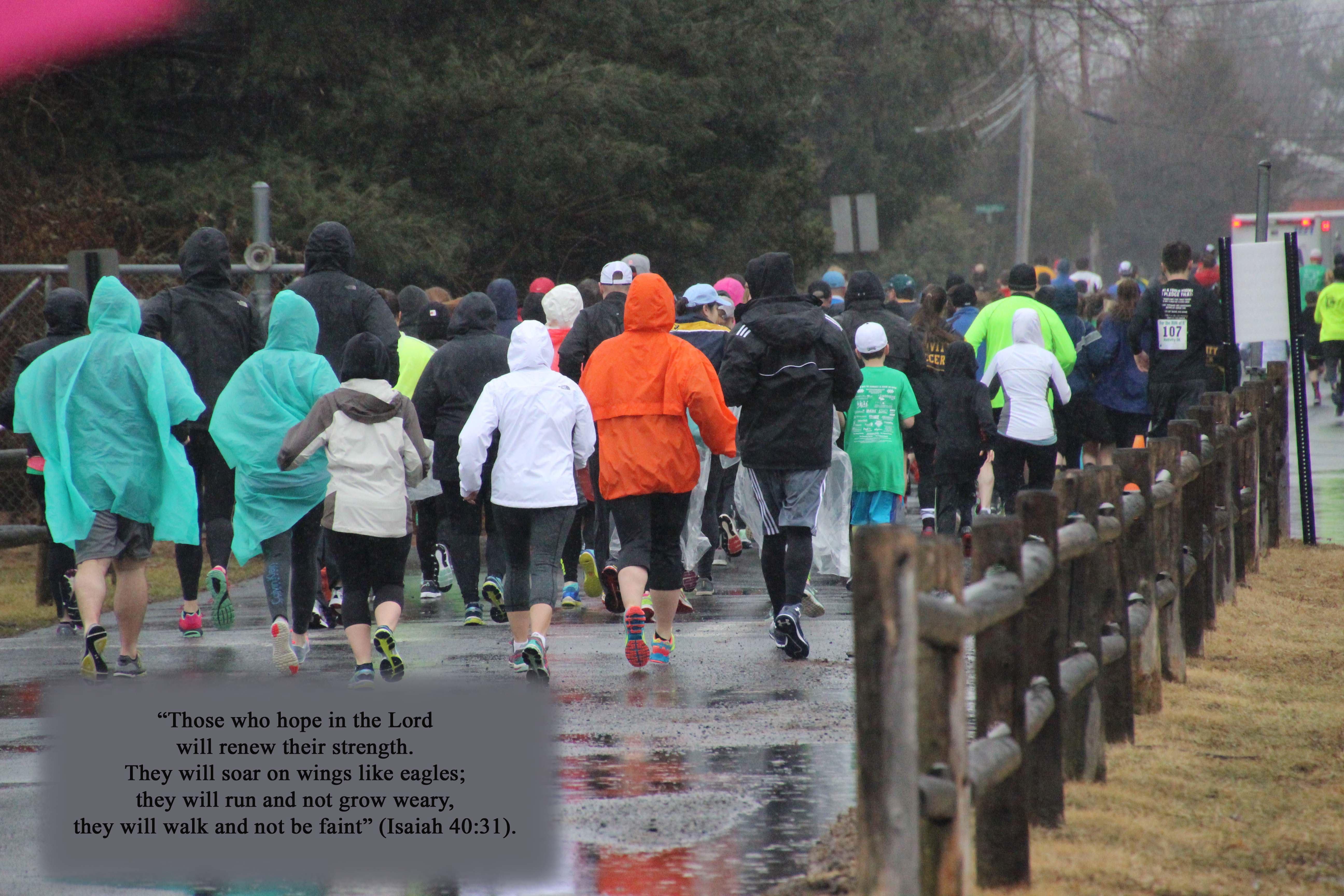
Recently I added one of those moments to my collection. Chris participated in a 5K run. He asked me to take pictures of the event. Howie joined me as we stood in the rain watching the participants. Joy flooded my heart as I watched Chris run along the route. He looked so focused and fit.

Chris.5K

After the race ended, the three of us enjoyed a celebratory meal at Red Lobster. All throughout dinner, Chris chatted happily about the event.

I’ve savored that memory and reflected on it often. God spoke to my heart saying, “I delight in watching you run your race.”

I imagined God running alongside me, guiding me, protecting me, and cheering me on. Can you envision that same scene? THAT’S a memory we can all share!

Our Companion has promised that, “When you walk, your steps will not be hampered; when you run, you will not stumble” (Proverbs 4:12).

Our other son, Rob once ran a twenty-six mile marathon. He told me that most marathon runners “hit the wall.” It’s a sudden wave of fatigue that sets in at about 20 miles into a marathon. God has entered us in the MI marathon. Sooner or later we all have moments of fatigue. When we feel as if our mental, emotional, physical, and spiritual resources have been depleted.

At those moments, how do we go on? By focusing on the end of our race.

“Do you not know that in a race all the runners run, but only one gets the prize? Run in such a way as to get the prize. Everyone who competes in the games goes into strict training. They do it to get a crown that will not last, but we do it to get a crown that will last forever” (1 Corinthians 9:24-25).

When we’re worn out and weary, God encourages us by promising that, “Those who hope in the Lord will renew their strength. They will soar on wings like eagles; they will run and not grow weary, they will walk and not be faint” (Isaiah 40:31).

Man’s GPS (Global Positioning System) will only help us navigate as we travel roads. We have access to a far better system: GPS, God’s Positioning System that helps us navigate through life.

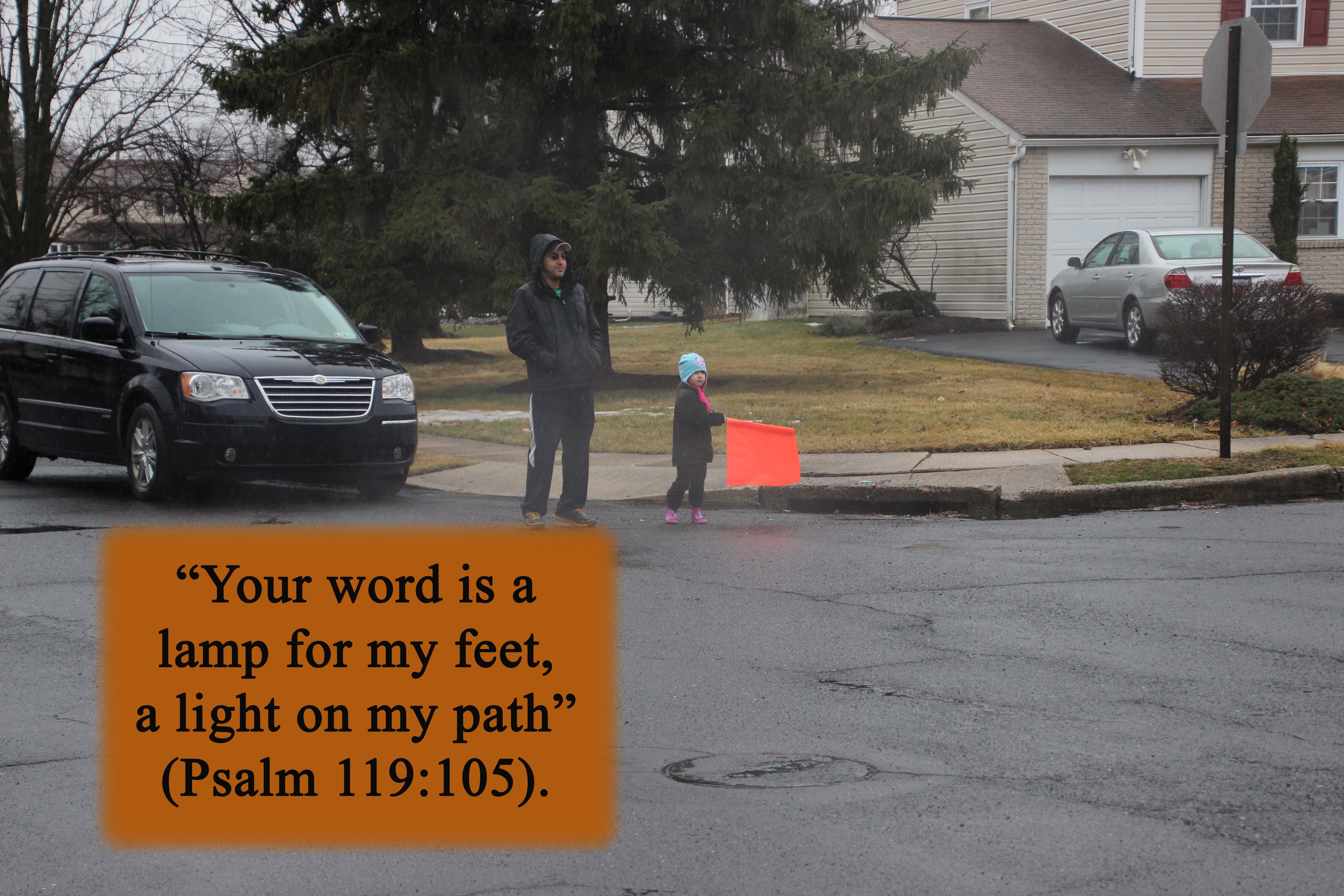
When we’re unsure where to turn, Scripture provides guidance. We can say with assurance, “Your word is a lamp for my feet, a light on my path” (Psalm 119:105).

Marshals guided runners along the course.

Marshals guided runners along the course.

“In all your ways submit to him, and he will make your paths straight” (Proverbs 3:6).

Our race in life will also be followed by a wonderful meal. I look forward to the feast that will be in heaven. An angel foretold of it saying, “Blessed are those who are invited to the wedding supper of the Lamb!” (Revelation 19:9).

Faith-stretching

faith.stretching

Silly Putty Stretched Faith

How strong is your amusement-park faith? Mine ended at the mammoth roller coaster. I’d go on any ride except that one. Until our friend, Ed increased my faith in that ride.

“I’m heading to the roller coaster,” he announced.

“Not me. I won’t go on that ride,” I balked. “That’s where I draw the line. I’m too afraid that the car I’m in will be hurled off the tracks. And catapult me into the air.”

“That’s the safest ride in the park,” Ed declared.

His assessment gave me the confidence I needed to join him. Not because of the way he stated the fact. But because of his credentials. For decades Ed had worked for a large city as their inspector of bridges and other structures.

At the end of my first ride, my fingers had to be pried off the lap bar. By my fifth ride I’d gone from terrified to thrilled. My faith in the ride increased, helping me to relax and enjoy the ride. I even joined the ranks of the brave hand-raisers. My arms waved in the air as the car whipped me up, down, and around the tracks.

Life can feel like a roller coaster. Especially when raising a child with mental illness (MI). Our journey surely wouldn’t be included on the list of fun rides at a theme park. Yes, God fills our lives with blessings. But there’s no amusement in the MI trip. Faith is necessary. Our trial makes it painfully obvious that trusting God is a daily process. That’s how we survive.

We put our trust in the Designer of the track we’re on. That step in faith enables us to relax in His care. Our eyes are opened to see His faithfulness. Then we’re able to fling our hands in the air as we praise Him for His power and love.

The thing about faith is that it comes in all amounts. Some days we might have strong and abundant faith in God. Other days it may be harder to relax in His care. Pressures grow. Stress increases. Faith weakens. How do we handle those faith-stretching times in our lives?

Early on in my journey with our son’s MI, it was as if I’d been trust onto the ride of terror. There were unexpected dips and turns. Chris had a break from reality and had to be hospitalized. Thankfully, he quickly became stabilized. Homeschool was needed. Thankfully, God provided instructors who could teach Chris’s college-level AP courses. Chris’s body chemistry changed, triggering another psychotic episode. Thankfully, there were other medications available which successfully treated him.

The more I rode the MI rollercoaster, the more my confidence grew. With each crisis came God’s provision.

There have been periods when I’ve had breaks from the MI rollercoaster. Then, suddenly, I’d realize I had been placed back on the ride. I’d sense the subtle clues. Chris’s behavior would change slightly. The sparkle in his eyes would fade. Tell-tale puffiness around his eyes would reveal secret torment. His conversations would be reduced to grunts.

Those were times which tested my faith. Times when I echoed the apostles’ request to, “Lord, Increase my (our) faith”! (Luke 17:5).

The book of Hebrews became my go-to place to shop for greater faith. It reminded me that I’m, “surrounded by such a great cloud of witnesses (Hebrews 12:1).”  I’d picture giants of faith mentioned in Hebrews eleven cheering me on. I’d hear Noah, Jacob, Abraham, and Moses yelling, “Hang in there, Vicki. God is with you. He’s still in control.”

Those men of great faith were human, like me. How did they keep the faith and even abound in faith? What was their secret? I think it’s found in Hebrews 12:1-3

“Therefore, since we are surrounded by such a great cloud of witnesses, let us throw off everything that hinders and the sin that so easily entangles. And let us run with perseverance the race marked out for us, fixing our eyes on Jesus, the pioneer and perfecter of faith. For the joy set before him he endured the cross, scorning its shame, and sat down at the right hand of the throne of God. Consider him who endured such opposition from sinners, so that you will not grow weary and lose heart.”

That passage in Hebrews begins with the challenge to throw off what hinders and entangles us. We’re burdened by our own thoughts and emotions. Worry and fear can weigh us down. Making it difficult to continue running our race. Our nurturing thoughts drive us to solve every problem. Some situations regarding our child’s MI can only be handled by treatment or therapists. And some need God’s intervention alone. In those cases our need to control the situation can block our path to complete trust in God. So we wonder if God’s still in control.

Verse one assures us that God is still in control of our lives. This race we run has been ‘marked out for us.’ It is a God-appointed path.

So how do we run? Our Trainer has provided instructions in verses one through three. We’re to run with perseverance having our eyes fixed on Jesus, while considering Him. As we reflect on all that He is and all that He’s done, our faith increases. The One who conquered death is on the throne. He’s alive and able! He’s the Source of all the inner strength we need.

We can be confident that we’ll be counted among those heroes of faith, “… whose weakness was turned to strength (Hebrews 11:34).”

We need not quiver in fear like Christ’s disciples who cried, “Lord, save us! We’re going to drown! (Matthew 8:25).” Jesus will calm the storms in our lives.

We can be like the centurion who told Jesus, “Lord, I do not deserve to have you come under my roof. But just say the word, and my servant will be healed (Matthew 8:8)”. We can have that same faith because we trust in the same God.

Clearly life is not a roller coaster. We don’t need to simply brace ourselves or buckle up. Our preparation involves wearing godly accessories. No outfit is complete without God’s shield a faith protecting our heart.

“In addition to all this, take up the shield of faith, with which you can extinguish all the flaming arrows of the evil one (Ephesians 6:16).”

Shields up!

Listen to Steve Green’s song: “Find Us Faithful” and imagine that great cloud of witnesses cheering you on.

http://www.youtube.com/watch?v=zi-Mn5tRHvM


Longing for Spock-Suppressed Emotions?

spock_0


“Just snap out of it!” What psychiatrist would ever prescribe that treatment for depression? One did. Lucy charged Charlie Brown five cents for that advice. Sadly, we know that it’s not possible to just snap out of it.

So what do we do with our fears and frustrations, regret and remorse, guilt and grief, sorrow and shame? Can we silence those painful feelings which result from mental illness (MI)? Why can’t we just face illogical situations without reacting?

Spock did it in Star Trek. But he was a fictitious alien. That character was portrayed by a real man with human emotions. In the New York Times’ article “Leonard Nimoy, Spock of ‘Star Trek,’ Dies at 83” Virginia Heffernan shared one of Nimoy’s statements.

“‘To this day, I sense Vulcan speech patterns, Vulcan social attitudes and even Vulcan patterns of logic and emotional suppression in my behavior,’ Mr. Nimoy wrote years after the original series ended.”

Is it possible to suppress emotions? Would it be wise to wave a wand over our child’s head and magically remove all feeling? Would it be better to spare him any future pain of MI at the expense of feeling anymore joy?

When Chris had to endure his first stay in a psychiatric unit I don’t know who was in greater pain: him or me. My seventeen-year-old son’s body lay on my lap in a fetal position crying, “Why? Why can’t I go home?” The gentle strokes of my fingers on his head couldn’t wipe away his turmoil.

It took several months for Chris to become functional enough to return to school. My own heartache grew so excruciating that I became numb. I’d watch movies to escape the tragic reality of my life. Even tear-jerking story lines couldn’t cause me to shed a tear. I had already cried an ocean-full.

The book of Psalms became my comfort. I identified with the Psalmist who engaged in healthy self-talk.

“Why, my soul, are you downcast? Why so disturbed within me? Put your hope in God, for I will yet praise him, my Savior and my God (Psalm 42:5, and 11).”

The Psalmist showed me a better way to escape. In the privacy of my bedroom, I could turn to God and find refuge in Him. Psalm 57:1 became my prayer.

“Have mercy on me, my God, have mercy on me, for in you I take refuge. I will take refuge in the shadow of your wings until the disaster has passed.”

God led Chris to a psychiatrist and psychologist who were both Christians. Those men provided godly advice. Healing words for Chris and for me. I’ll forever be grateful for their expertise. But also feel, “It is better to take refuge in the Lord than to trust in humans (Psalm 118:8).”

I’ve learned that, “The righteous will rejoice in the Lord and take refuge in him; all the upright in heart will glory in him (Psalm 64:10)!”

I found relief in the promises of Psalm 51: 10 and 12. That God would restore my joy and sustain me.

“Create in me a pure heart, O God, and renew a steadfast spirit within me. Restore to me the joy of your salvation and grant me a willing spirit, to sustain me (Psalm 51:10, 12).”

So would it be better to be like Spock, void of emotions? Having experienced the joy of the Lord and knowing His perfect peace, I say no! I’m glad I’m not like Spock.

But here’s a thought. We can actually achieve Spock’s blessing: “Live long and prosper.” Christians have been given the gift of eternal life and have access to God’s unlimited riches.

“For God so loved the world that he gave his one and only Son, that whoever believes in him shall not perish but have eternal life (John 3:16).”

Just close your eyes and picture this heavenly scene:

“Because of his great love for us, God, who is rich in mercy, made us alive with Christ even when we were dead in transgressions—it is by grace you have been saved. And God raised us up with Christ and seated us with him in the heavenly realms in Christ Jesus, in order that in the coming ages he might show the incomparable riches of his grace, expressed in his kindness to us in Christ Jesus (Ephesians 2:4-7).”

We may not know what tomorrow holds, but we have a living hope. So we can join Peter and say, “Praise be to the God and Father of our Lord Jesus Christ! In his great mercy he has given us new birth into a living hope through the resurrection of Jesus Christ from the dead, and into an inheritance that can never perish, spoil or fade. This inheritance is kept in heaven for you (1 Peter 1:3-4).”

We WILL certainly live long and prosper. I don’t know about you, but I’m grateful for emotions. With the ability to love and be loved by God.

By the way, Virginia Heffernan explained why Leonard Nimoy chose his split-finger salute for Spock’s character. She wrote that, “He based it on the kohanic blessing, a manual approximation of the Hebrew letter shin, which is the first letter in Shaddai, one of the Hebrew names for God.”

What a wonderful way to greet others: by sharing God!

Cast

emotions.healing

Imagine having enough money to hire someone to worry for you. The designated worry wart would provide you with care-free thinking and peaceful emotions. Their job description: take on all your anxiety. Specific tasks would include: wringing hands, enduring sleepless nights, and imagining worst-case scenarios (however unrealistic). The trusted employee would promise to: never share any of their negative thoughts or painful emotions with you, never offer you any advice to improve situations, and never pass along encouraging words to you.

Sounds like an enticing proposition, huh? It would only work if you turned over your concerns completely. Holding anything back would keep you in the worry loop. Maybe having enough money for that extravagance isn’t your biggest problem. If you’re anything like me, the complete release would be the greatest challenge.

Why do I find it so hard to leave my concerns at the throne of God?

Recently football gave me insight into why I withhold my cares. A quarterback has to fully release the ball in order to be part of a successful pass completion. Once he throws the ball, he relies on the skill of the receiver to catch it. Not every ball is caught. Athletes are human.

But we have access to a perfect Receiver. If we toss our cares heavenward, God has promised to receive them. However, we must fully release them. We know He has the almighty power to handle our problems. We sometimes lack the willingness to trust Him with all the details.

Here’s a peek into my half-hearted trust:

Heavenly Father, please protect Chris as he ventures into the city. Thank You that You go with him wherever he travels. I know You love Chris with a love more perfect than mine.

As night falls and Chris hasn’t yet returned, the worries I held back begin to emerge.

Did Chris wear warm clothes. What if he missed the last train out of the city? Has he been harmed?

I’m like a quarterback who thrusts his hand forward, while keeping his fingers tightly gripped on the ball. What’s the point of worrying? Do I really think it will do any good?

My worrying leads to guilt feelings. I feel like my faith is weak and I’ve failed in my walk with the Lord.

Thankfully, God knows I’d need assurances. He leads me to these reminders:

“Cast your cares on the Lord and he will sustain you; he will never let the righteous be shaken (Psalm 55:22).”

“Cast all your anxiety on him because he cares for you (1 Peter 5:7).”

The next time I’m facing a potentially worrisome event, I’ll picture my thoughts tucked inside a football. With my mind’s eye focused on God, I’ll imagine throwing the package full of care His way. And “watch” my fingers unfold from the ball and fold again in prayer.


Raising a child with mental illness (MI) can be a lonely journey. Other words which include ‘cast’ come to mind. Like castaway. Do you feel like you’ve been cast aside? Left all alone like a castaway?

Have you been so devastated that you feel downcast? On the brink of depression?

Imagine Christ putting a cast around your heart. Like a cushion to stabilize your emotions while they heal. Feel His arms embrace you. And cast your eyes upon Him.

The lyrics of “Turn Your Eyes upon Jesus” remind us of the benefits of shifting our focus towards Christ.

Turn your eyes upon Jesus,

Look full in His wonderful face,

And the things of earth will grow strangely dim,

In the light of His glory and grace.

Rest in His peace as you listen to ‘Turn Your Eyes Upon Jesus’ by Alan Jackson

https://www.youtube.com/watch?v=nO4uIyz_d90

Perspective

One Perspective

One Perspective

Another Perspective

Another Perspective


Finish this sentence: when it starts snowing, I …

Maybe you find delight and:

  • Pray for a day off from school
  • Go skiing
  • Earn tons of money removing it
  • Take pictures
  • Make a snowman

Or maybe you dread it and:

  • Scream, “Not again!!!”
  • Search for a sitter for the kids
  • Hurt your back shoveling

When I taught 2nd graders, faint snowflakes would spark an avalanche of excitement. Teachers would dread it. Students would love it.

The invasion of the frozen precipitation would threaten to sabotage my lessons. It often seemed as if the winter storm had blown their attention right out the window. I’d have a choice: to maintain my dismal perspective of the situation or join them in their delight.

I found it helped to adopt my students’ perspective. Rather than fight to win back their attention, I’d embrace their exhilaration. They simply needed the opportunity to release their enjoyment.

“Boys and girls, it’s snowing outside. We’re all going to celebrate at the same time. I’ll dismiss you row, by row. Once everyone is assembled by the window, I’ll open the curtains and we’ll all explode with enthusiasm. Get it out of your system so you can concentrate on your lessons when you return to your desks.”

Recently we got hit with another snowstorm. My first reaction was disgust.

Great. Now I’ll have to clean the snow off my car so I can get to the store.

With my car finally snowless, I was ready to get on with my errands. I grabbed my purse and also my camera.

Maybe I’ll want to take some pictures.

At first, all I noticed was the filthy dirty snow that lined the street. Definitely not a Kodak moment. I had to force myself to look beyond the cinder-splattered snow to find spotless snow scenes.

I wondered. Can we force ourselves to view our circumstances differently? Is it possible to find pleasant thoughts among the unhappy experiences of raising a child with mental illness (MI)? I think so.

If I was able to deliberately ignore the dirty snow and focus on the pure white snow, I can make a conscious effort to view my trials in a new way. I can occupy my thoughts with of MI, or look for God’s pure and perfect purpose in allowing it. I can search for His hand in the situation.

If we searched for Him in the trial, what would we find?

Like the Israelites, we’d become more certain that He is the LORD our God who brings us out from under our burdens.

“ ‘I will take you as My people, and I will be your God. Then you shall know that I am the LORD your God who brings you out from under the burdens of the Egyptians.’”  Exodus 6:7

Like the Israelites, we’d discover others seeing God’s power in our lives.

“for the LORD your God dried up the waters of the Jordan before you until you had crossed over, as the LORD your God did to the Red Sea, which He dried up before us until we had crossed over, that all the peoples of the earth may know the hand of the LORD, that it is mighty, that you may fear the LORD your God forever.”    Joshua 4:23-24

Like Christ’s disciples, we’d witness His works in afflictions.

“Now as Jesus passed by, He saw a man who was blind from birth. And His disciples asked Him, saying, ‘Rabbi, who sinned, this man or his parents, that he was born blind?’

“Jesus answered, ‘Neither this man nor his parents sinned, but that the works of God should be revealed in him.’”   John 9:1-3

Like the Mary and Martha, we’d see God glorified through the trial.

“When Jesus heard that, He said, “This sickness is not unto death, but for the glory of God, that the Son of God may be glorified through it.  Now Jesus loved Martha and her sister and Lazarus. So, when He heard that he was sick, He stayed two more days in the place where He was…Then Jesus said to them plainly, ‘Lazarus is dead. And I am glad for your sakes that I was not there, that you may believe. Nevertheless let us go to him.’”  John 11:4-6, 14-15

May God help you find Him throughout your day today.

Speechless

SPEECHLESS

Silence fell over the college dining hall. Everyone savored each bite of the roast beef. Back in the day, such a meal came only once a year—at final time. Usually we had to choose from one form of “mystery meat” or the salad bar. Entrees often tasted like hospital food. So roast beef was a real treat. We didn’t want to interrupt the taste sensation with casual chatter. We were speechless.

Other things which delight our senses can leave us speechless. A breathtaking sunset which could never be captured. An unmatched athletic fete which would appear impossible to duplicate. An orchestra performance which could only be rewarded by a standing ovation.

The temporary inability to speak is usually caused by strong emotions. Either good or bad. Horror can render one speechless. Like news of the death of a loved one.

Often there are no words to describe secret pain suffered. A mother watching her child struggle with mental illness (MI) doesn’t even attempt to explain what’s in her heart. The carefree smile on her child’s face has been replaced with a dark stare. The young head that used to tip backwards in bubbling giggles now hangs down like a heavy wet rag. Her child once used to be the life of a party. Now she’s an empty shell of a person. Lifeless.

No words can explain the sorrow.

Mothers aren’t the only ones left speechless in the wake of MI. Sometimes our children with MI don’t speak. Clinical depression robs them of any desire to communicate. How their parents long for happy conversations!

Refraining from speaking isn’t always a bad thing. The best response often is silence. Whenever Chris fires unprovoked anger my way, I shoot a quick prayer heavenward. Asking God to help me remain silent. Whenever Chris makes an odd statement, Howie listens without response. Withholding our anger or judgment delivers an unspoken blessing to Chris. Silence conveys our unconditional love.

Poets and leaders have written about the value of silence.

Thomas Hardy (1840-1926), the British novelist and poet observed, “That man’s silence is wonderful to listen to.”

Winston Churchill (1874-1965), the British politician, pointed out, “When the eagles are silent the parrots begin to jabber.”

Mark Twain (1835-1910), a man known for his words, touted the benefits of silence. He chose strong descriptors to convey his passion about a pause. “The Pause; that impressive silence, that eloquent silence, that geometrically progressive silence which often achieves a desired effect where no combination of words however so felicitous, could accomplish it.”

What about the Bible? Does it tell us anything about silence? Christ often didn’t respond. He used silence to convey a powerful message or to make a point. Sometimes His silence was coupled with a look. Peter experienced one of those.

“Peter replied, ‘Man, I don’t know what you’re talking about!’ Just as he was speaking, the rooster crowed. The Lord turned and looked straight at Peter. Then Peter remembered the word the Lord had spoken to him: ‘Before the rooster crows today, you will disown me three times (Luke 22:60-61).’”

We find biblical warnings associated with talking in Proverbs. Verse nineteen in chapter ten tells us that, “In the multitude of words sin is not lacking, but he who restrains his lips is wise.”

That’s what moms raising kids with MI need. Wisdom. Scripture emphasizes the importance of investing serious contemplation before speaking.

“The heart of the righteous studies how to answer (Proverbs 15:28  NKJV).”

Knowing how fragile our children are, we choose our words wisely.

Proverbs 17:27 instructs us to use words sparingly. It provides a formula for a calm spirit. Knowledge + understanding + few words = a calm spirit.

“He who has knowledge spares his words, and a man of understanding is of a calm spirit.”

As we minister to our children with MI we seek a calm spirit. For our children and for us. We not only find serenity in carefully chosen words. We find peace in God’s glory. His creation leaves us breathless and reminds us of His power. In Him we have an all-powerful King who offers unlimited hope.

Phil Wickham, in his song ‘This is Amazing Grace’ sings about how God’s glory which leaves us breathless.

“Who shakes the whole earth with holy thunder

And leaves us breathless in awe and wonder

The King of Glory, the King above all kings”

Reflect on that breathless wonder as you listen to, ‘This Is Amazing Grace’ Phil Wickham    https://www.youtube.com/watch?v=cgsbaBIaoVc

Support

Support.W.verse

I’m used to swallowing corn, not vice versa. That’s what it felt like when my feet got sucked into the corn box. We were visiting Port Farms in Waterford, PA with our granddaughter. I couldn’t resist the opportunity to frolic in the corn box with her. The sea of kernels felt like quick sand. As I struggled to stand up, I got pulled deeper into the corn. My eighty-seven year old mother leaned over the rail and helped me stand.

Corn box at Port Farms in Waterford, PA http://www.portfarms.com/

Corn box at Port Farms in Waterford, PA
http://www.portfarms.com/

We all need support from time to time. Moms raising children with mental illness (MI) could use support. But the stigma prevents us from seeking assistance. We’re hesitant to reach out because we fear someone wouldn’t understand. Or worse, we worry we’ll be judged. And then be given unsolicited advice.

Yet, we certainly could use support. Logistically, financial, physically, mentally, and emotionally. Help tending to chores would be appreciated. Advice from someone who truly understands could be useful in making decisions (regarding treatment or mental health care providers). Assistance navigating health benefits would be a relief. Certainly a sympathetic shoulder to cry on would comfort our broken heart.

In thinking about the word ‘support’ I considered Moses. He faced a daunting task leading more than 600,000 people to the Promised Land (Numbers 11:21). He endured years of struggles because his journey continued for decades.  He learned that marathon misery can only be transformed to victory with God’s intervention. Moses witnessed God’s power, longsuffering, and faithfulness.

We can relate to a trial that seems to continue forever. We can identify with Moses’ role in managing everything. Moses was so busy tending to everyone’s needs that he didn’t realize it would lead to burn out. His father-in-law had to point out the obvious. Jethro asked Moses, “‘What is this you are doing for the people? Why do you alone sit as judge, while all these people stand around you from morning till evening?’

“Moses answered him, ‘Because the people come to me to seek God’s will. Whenever they have a dispute, it is brought to me, and I decide between the parties and inform them of God’s decrees and instructions.’

“Moses’ father-in-law replied, ‘What you are doing is not good. You and these people who come to you will only wear yourselves out. The work is too heavy for you; you cannot handle it alone (Exodus 18:14-18).’”

Sound familiar? Your family members come to you with a need and you fill it. “The work is too heavy for you; you cannot handle it alone”: did those words hit you like a sledge hammer?

Me? Not able to handle everything alone?

Jethro offered advice. He instructed Moses to, “Select capable men from all the people—men who fear God, trustworthy men who hate dishonest gain—and appoint them as officials over thousands, hundreds, fifties and tens. Have them serve as judges for the people at all times, but have them bring every difficult case to you; the simple cases they can decide themselves. That will make your load lighter, because they will share it with you (Exodus 18:21-22).”

That wasn’t the only time Moses needed support. When Moses faced the Amelekites, things didn’t go as planned.

Initially, all seemed to go well. Moses disclosed his plan, ordering Joshua to, “‘Choose some of our men and go out to fight the Amalekites. Tomorrow I will stand on top of the hill with the staff of God in my hands.’

“So Joshua fought the Amalekites as Moses had ordered, and Moses, Aaron and Hur went to the top of the hill (Exodus 17:9-10).”

Moses lifted God’s staff for his army to see. But, like many of us, Moses got weary. His arm dropped. That presented a HUGE problem.

“As long as Moses held up his hands, the Israelites were winning, but whenever he lowered his hands, the Amalekites were winning (Exodus 17:11).”

Are you tempted to wonder what would happen if you dropped your heavy load? There’s no shame in needing support.

Moses received support from friends.

“When Moses’ hands grew tired, they took a stone and put it under him and he sat on it. Aaron and Hur held his hands up—one on one side, one on the other—so that his hands remained steady till sunset. So Joshua overcame the Amalekite army with the sword (Exodus 17:12-13).”

Sometimes God uses reliable friends to help us overcome our challenges.

Did you ever notice that you can manage everything until someone complains? That’s the last straw. It was for Moses.

Imagine Moses leading a multitude of people in the wilderness. Think of the logistics. Now picture tons of people lined up at Moses’ tent weeping and complaining. Hear them saying, “We remember the fish we ate in Egypt at no cost—also the cucumbers, melons, leeks, onions and garlic. But now we have lost our appetite; we never see anything but this manna (Numbers 11:5-6)!”

That was their version of what we hear from our kids: “We never have any food in the fridge!”

So Moses complained to God asking, “Why have you brought this trouble on your servant? What have I done to displease you that you put the burden of all these people on me? Did I conceive all these people? Did I give them birth? Why do you tell me to carry them in my arms, as a nurse carries an infant, to the land you promised on oath to their ancestors? Where can I get meat for all these people? They keep wailing to me, ‘Give us meat to eat!’ I cannot carry all these people by myself; the burden is too heavy for me. If this is how you are going to treat me, please go ahead and kill me—if I have found favor in your eyes—and do not let me face my own ruin (Numbers 11:11-15).”

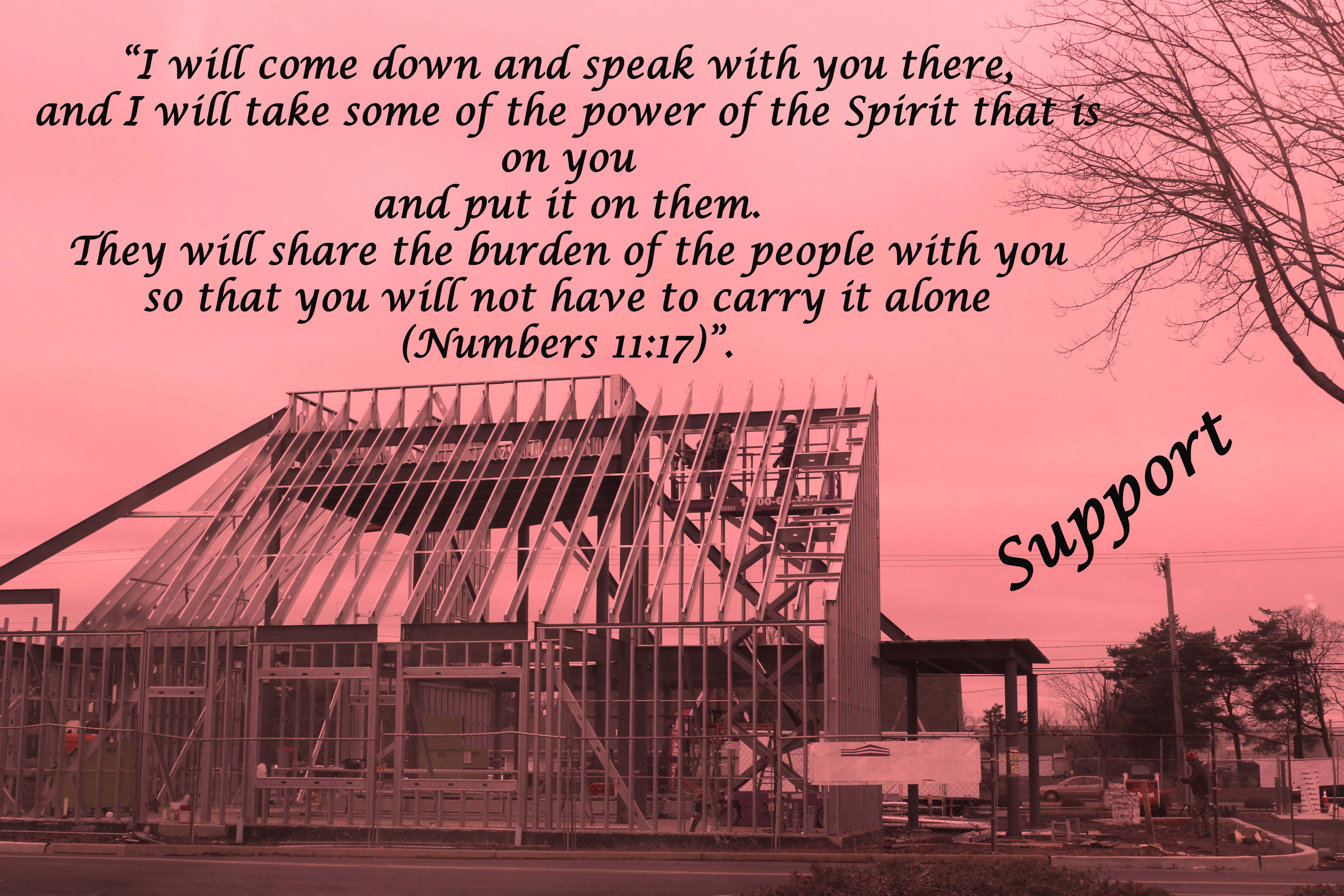
Moses was at his wit’s end. He saw no way out and didn’t want to witness his own ruin. The Lord knew Moses needed others to share his burden. So He instructed Moses to, “Bring me seventy of Israel’s elders who are known to you as leaders and officials among the people. Have them come to the tent of meeting, that they may stand there with you. I will come down and speak with you there, and I will take some of the power of the Spirit that is on you and put it on them. They will share the burden of the people with you so that you will not have to carry it alone (Numbers 11:16-17).”

Ask God to ease your burden and provide support. What is it you need from Him?